
Why Won't My Garage Door Open? 9 Common Causes

Quick answer
A garage door that won’t open is almost always caused by one of nine things: no power to the opener, dead remote batteries, vacation or lock mode turned on, blocked safety sensors, a broken spring, a snapped cable, a door knocked off its track, worn opener gears, or an engaged manual lock. Most of these take a minute to check. A few are dangerous to touch yourself.

If your garage is the main way in and out of the house, a stuck door isn’t just annoying. It’s a problem you notice the moment it happens. Here’s how to work through the most common causes, starting with the ones you can check yourself.

How Serious Is the Garage Door Issue?

Severity

What’s wrong: No power, dead batteries, vacation mode mistakenly enabled, blocked sensors, manual lock engaged

What to do: Check it yourself. Usually solved in a few minutes.

What’s wrong: Motor runs but the door doesn’t move, grinding noise, plastic shavings near the opener

What to do: Keep using it carefully, but schedule a technician soon.

What’s wrong: Loud bang, visible gap in the spring, crooked door, snapped cable, door off its track

What to do: Stop. Don’t force the door. Call a pro now.

SeverityWhat's WrongWhat To Do
MinorNo power, dead batteries, vacation mode mistakenly enabled, blocked sensors, manual lock engagedCheck it yourself. Usually solved in a few minutes.
ModerateMotor runs but the door doesn't move, grinding noise, plastic shavings near the openerKeep using it carefully, but schedule a technician soon.
SeriousLoud bang, visible gap in the spring, crooked door, snapped cable, door off its trackStop. Don't force the door. Call a pro now.

Need help with your garage door? Give Conejo Services a call today at 805-499-0448 or schedule an appointment online now.

CAUSES

Cause #1: Garage Door Opener Has No Power

This is the most common reason a garage door won’t open, and the easiest to spot. Press the remote or wall button and get nothing. No light, no motor sound, no click.

Check: Make sure the opener is plugged in and the outlet has power. Look at your breaker panel for a tripped circuit. During a heat wave, a shared circuit can trip more easily than usual.

When to call a pro: If power is fine at the outlet but the opener still won’t respond, the unit itself may have failed.
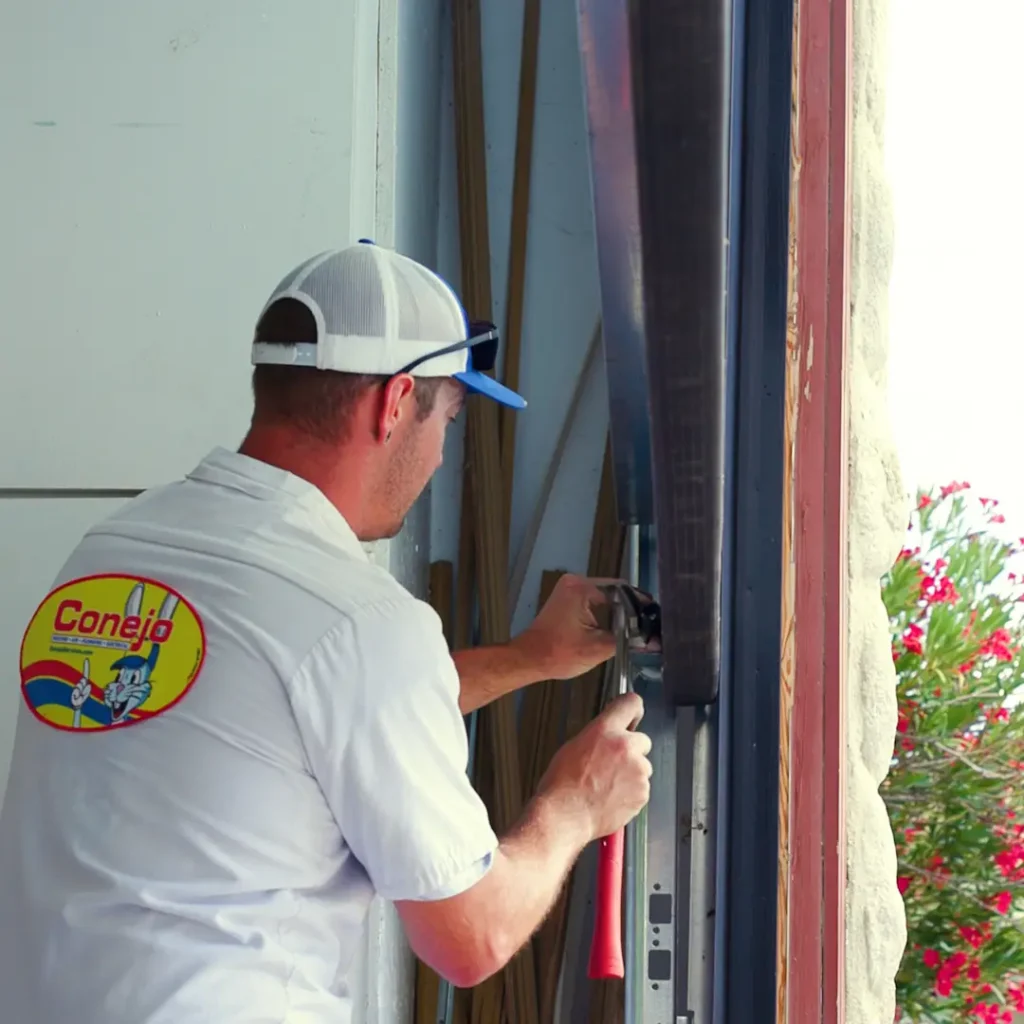
Conejo Services garage door technician installing rollers

Cause #2: Dead Garage Door Remote or Keypad Batteries

If the wall button opens the door but the remote doesn’t, the fix is usually in your hand.

Check: Swap the remote batteries. If the keypad is slow or unresponsive, replace those batteries too. Weak signal can also happen if something is blocking the antenna on the opener unit.

When to call a pro: If a fresh battery doesn’t solve it, the receiver inside the opener may need attention.

Cause #3: Garage Door Vacation or Lock Mode Is Turned On

Most openers have a lock or vacation setting that disables remotes for security. It’s an easy button to bump by accident, especially on a wall panel near where kids reach.

Check: Look for a lit lock icon on the wall control. Press and hold to release it, then try the remote again.
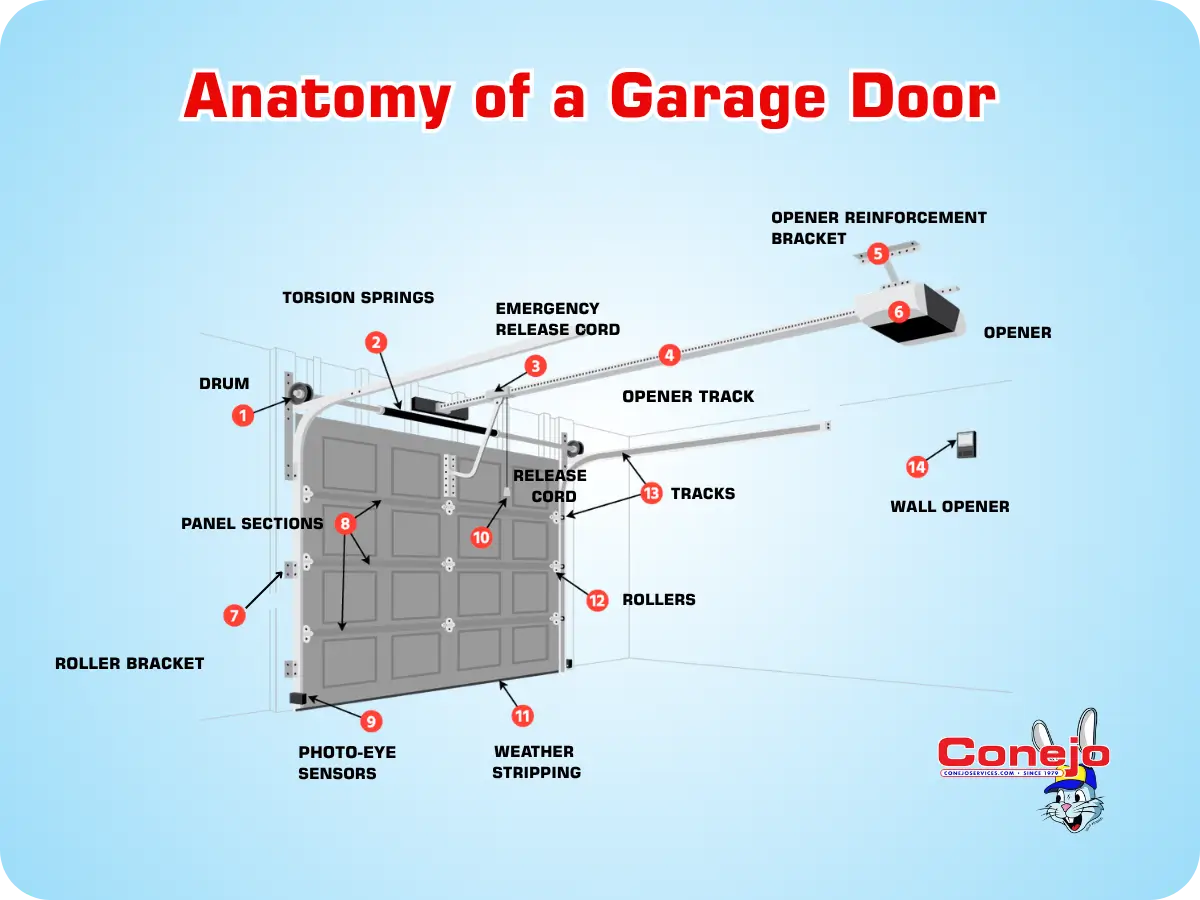
Cause #4: Garage Door Safety Sensors Are Blocked or Out of Alignment

Every garage door opener has a pair of sensors near the floor that have to see each other in a straight line. If anything interrupts that line, the door won’t close, and on some systems it won’t open either.
Check: Look for the small sensor eyes on each side of the track, a few inches off the ground. Clear away anything in the way, wipe off dust, and make sure neither sensor has been bumped out of position. Santa Ana winds can kick up enough dust and debris to throw these off.
When to call a pro: If the sensors look aligned and clean but the lights on them are still off or blinking, they may need to be reset or replaced.
Click to expand

Cause #5: Manual Lock or Emergency Release Is Engaged

Some doors have a manual slide lock on the inside for extra security, and every opener has a manual release cord for use during a power outage. If either has been engaged, even by accident, the door will look stuck even though nothing is actually broken.

Check: Look for a slide bolt or bar on the inside of the door. Check whether the red release cord near the opener has been pulled, which disconnects the door from the motor entirely.

Cause #6: The Garage Door Opener's Internal Gears Are Worn Out

On chain and screw-drive openers, the motor can run just fine while the internal gears that actually move the door have worn down over time. You’ll hear the motor working, but the door stays put.

What it looks like: Motor noise with no movement, sometimes with a grinding sound or a light dusting of plastic shavings near the opener housing.

When to call a pro: This is a repair job, not a DIY one. Gear kits exist, but installing them safely takes the right setup.

Schedule Garage Door Service Now

Our expert garage door technicians will diagnose the issue and get your door running smoothly again

Cause #7: A Garage Door Spring Is Broken

Springs do the heavy lifting. They counterbalance the weight of the door so the opener motor doesn’t have to. When one breaks, you’ll often hear a loud bang, and the door will feel stuck or unusually heavy even though the motor is running.

What it looks like: The opener runs, but the door won’t budge, or it only lifts a few inches. A visible gap in the spring above the door is a clear sign.
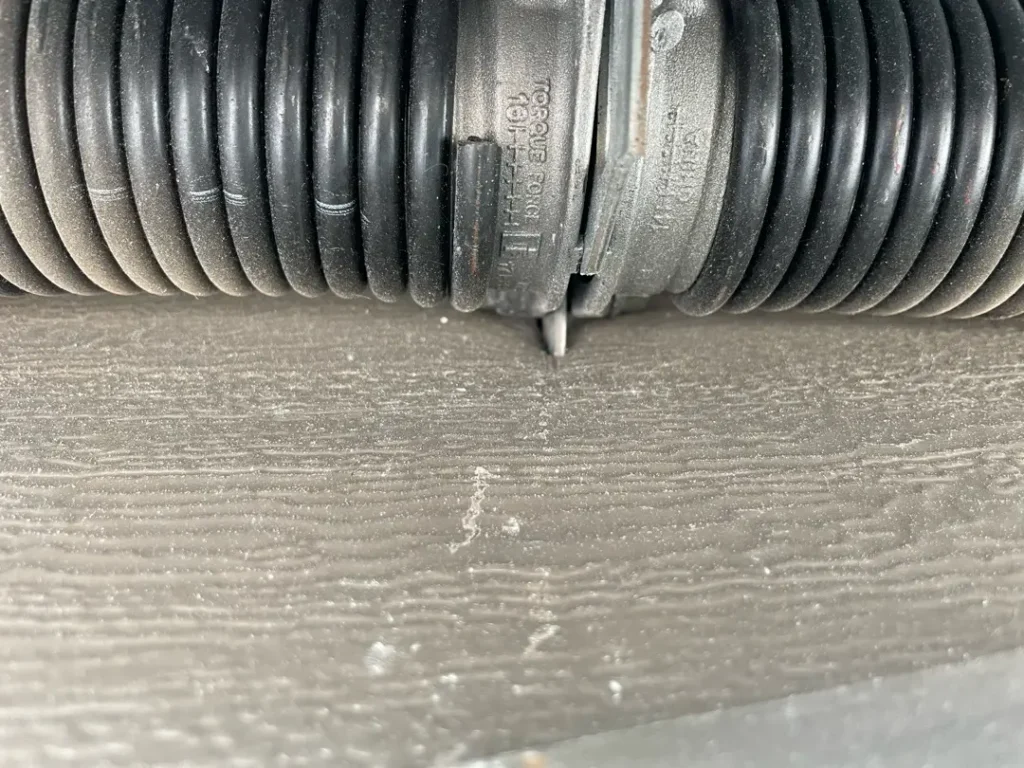
When to call a pro: Springs are under enough tension to cause serious injury. This is not a repair to attempt yourself. Leave the door closed and call a technician.
Broken garage door spring
A broken garage door torsion spring, with the break right next to the winding cone. The visible gap between the coils is a clear sign that the spring itself has snapped.

Cause #8: A Garage Door Cable Is Broken or Loose

Cables work alongside the springs to guide the door’s weight evenly. A snapped or slipped cable often shows up as a door that hangs crooked or drops suddenly on one side.
What it looks like: The garage door looks uneven, or one side seems to move while the other doesn’t.
When to call a pro: Like springs, cables are under high tension. A technician should handle this repair.

Cause #9: The Garage Door Is Off Its Track

If rollers slip out of the track, usually from an impact, worn hardware, or age, the door can bind, stick, or refuse to move at all.
What it looks like: Gaps between the rollers and the track, or a door that looks tilted or uneven when you look at it straight on.
When to call a pro: Forcing a door back onto its track without the right tools can bend the track further or cause the door to fall. This is a call-a-pro situation.

Need Help With Your Garage Door?

Our experienced team is available for same-day and next-day appointments

Still Stuck?

If you’ve gone through this list and you’re still stuck, or you’d rather not get up on a ladder to find out, we’re glad to take a look. Conejo Services covers garage door repair across Ventura, Los Angeles, and Santa Barbara counties, and we’re available 24/7 for the ones that can’t wait.

FAQs

Can I fix a broken garage door spring myself?
No. Torsion and extension springs are under enough tension to cause serious injury if handled without the right training and tools. This is a job for a technician.
This usually points to worn internal gears, a broken spring, a snapped cable, or the door being disengaged from the opener through the manual release cord. Check the release cord first, since that one’s easy to fix yourself.
Start with the remote batteries. If that doesn’t help, check for anything blocking the opener’s antenna, or a vacation/lock mode setting turned on at the wall panel.
No. Forcing a door that’s stuck due to a broken spring, snapped cable, or off-track roller can cause the door to fall or the track to bend further. Stop and call a technician instead.
This usually points to blocked or misaligned safety sensors, or opener limit settings that need adjusting. Start by checking the sensors for dust or obstructions.
Yes. Wind events like Santa Ana winds can kick up enough dust and debris to knock sensors out of alignment or coat the lenses enough to block the signal between them.
Every opener has a manual release cord, usually a red rope hanging near the motor. Pulling it disconnects the door from the opener so you can lift it by hand. Reconnect it once power is back by following your opener’s manual.
Watch for a door that feels heavier than usual to lift manually, visible gaps or rust on the spring, or a door that no longer stays open partway on its own. Any of these are worth a technician’s look before the spring breaks completely.
Some hum from the motor is normal. Grinding, squealing, or banging is not, and usually points to worn rollers, a failing gear, or a spring under stress.

Learn more about our garage door repair services.