
If you live in earthquake country, you already know the drill: secure your water heater, bolt your bookshelves, keep an emergency kit handy. But installing an earthquake gas shut-off valve is one of the most important safety upgrades a homeowner can make… and it’s one that often gets overlooked. It could be the difference between a scary night and a total disaster.
When an earthquake hits and the shaking stops, the danger isn’t always over. If the earthquake is strong enough to crack or break your gas pipes, gas will keep flowing right into your home long after the ground settles. That continuous leak creates a serious fire and explosion risk, especially when you’re dealing with downed power lines, sparks from appliances, or even a lit pilot light.
An earthquake gas shut-off valve, also called a seismic gas shut-off valve, solves this problem automatically.
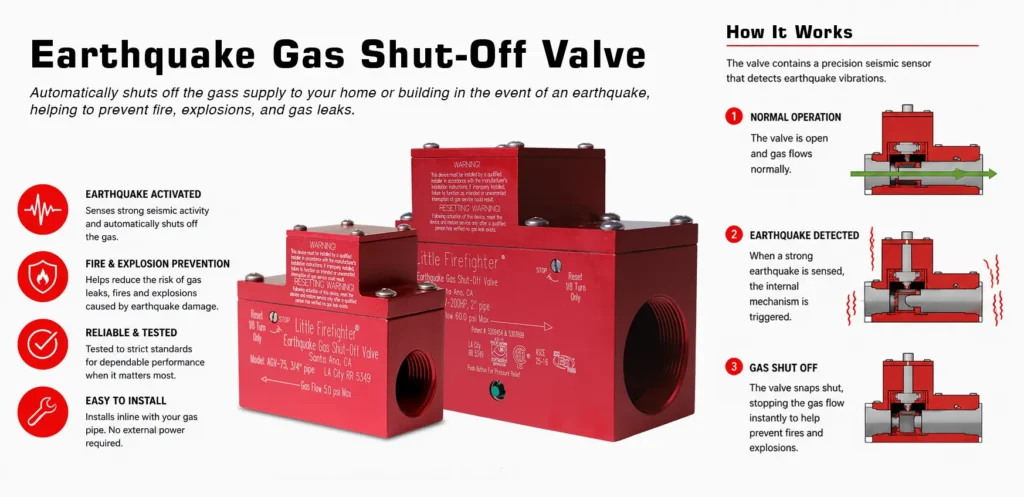
Watch as one of Conejo Services’ plumbers breaks down everything you need to know about earthquake gas shut-off valves in just 52 seconds: what they are, how they work, and how to reset one.
Once the valve has triggered, resetting it is straightforward. There’s a small reset button on the side of the unit. All you need is a flathead screwdriver: insert it, give it a turn, and the valve resets. Before you do, though, make sure to check your pipes for any visible damage and air out the space first. If you smell gas or notice any damage, leave the house and call your gas provider before attempting a reset.
Learn more about our plumbing services.